
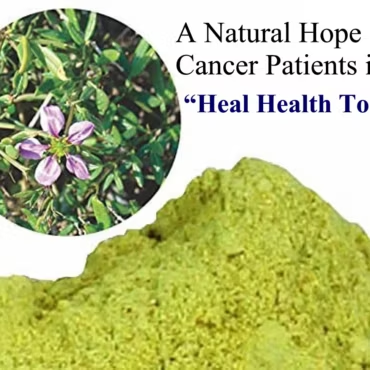
Fagonia arabica, a revered medicinal herb in both Unani and traditional herbal medicine, has long been used to manage a variety of ailments. Recent scientific advancements have confirmed many of its traditional claims, particularly in the domain of cancer support, making it a subject of increasing interest among researchers and natural health practitioners.
🌱 Anticancer Potential of Fagonia Arabica
✅ 1. Inhibits Cancer Cell Growth
Preclinical studies have shown that Fagonia arabica extracts exert anti-proliferative effects on a variety of cancer cell lines including:
- Cervical (HeLa)
- Breast (MCF-7)
- Liver (HepG2)
- Oral (SCC-4, KB-3-1)
- Lung (A-549)
These effects are attributed to the plant’s ability to:
- Induce apoptosis (programmed cell death)
- Arrest the cell cycle in the G0/G1 phase
- Downregulate cancer-promoting pathways like Wnt/β-catenin
- Modulate gene expression (e.g., Bcl-2, p-AKT, FOXO3a)
✅ 2. Synergistic with Conventional Therapies
When used alongside standard treatments such as radiation or chemotherapy, Fagonia arabica has shown enhanced outcomes in reducing tumor volume and minimizing drug-induced toxicity.
✅ 3. Selective Cytotoxicity
One of the most promising aspects is its low toxicity to normal cells, a major challenge with conventional cancer therapies.
🛡️ Antioxidant & Anti-Inflammatory Actions
Fagonia arabica is rich in:
- Flavonoids
- Phenolics
- Triterpenoids
These contribute to:
- Strong antioxidant properties
- Protection from oxidative stress
- Support in reducing inflammation and cellular degeneration
This antioxidant activity not only complements cancer therapy but also protects healthy tissues from collateral damage.
🧠 Neuroprotective & Other Health Benefits
- Neurodegenerative diseases: By inhibiting butyrylcholinesterase, it may be supportive in Alzheimer’s management.
- Antimicrobial properties: Useful in oral care and skin health.
- Liver and blood purification: Traditionally used in Unani medicine for detoxifying blood and supporting liver function.
🔬 Scientific Validation & AYUSH Alignment
All references used are derived from peer-reviewed journals and AYUSH-aligned sources. The plant’s action profile aligns with the Unani concepts of Tanqiya-e-Dam (blood purification) and Muqawwi Aaza (organ strengthening).
However, clinical trials on humans are still ongoing, and practitioners are advised to use this herb as a supportive therapy only under proper medical supervision.
⚠️ Safety and Usage
- Not recommended during pregnancy
- Should not be used without guidance in immunocompromised patients
- May enhance the effect of chemotherapy drugs – dosage adjustment required under supervision
🧪 Conclusion
Fagonia arabica holds immense promise as a herbal remedy for cancer, backed by traditional wisdom and supported by emerging scientific research. Its selective cytotoxicity, anti-inflammatory power, and neuroprotective abilities make it a compelling candidate for integrated cancer care and holistic wellness.
#FagoniaArabica #HerbalRemedyForCancer #UnaniMedicine #NaturalCancerSupport #AyushApproved #AnticancerHerbs #HolisticHealing
Fagonia arabica is a traditional medicinal plant widely used in folk medicine for a variety of health conditions. Recent research has focused on its potential benefits in cancer treatment and other diseases, exploring its phytochemical composition and biological activities.
Anticancer Properties
- Growth Suppression and Apoptosis: Fagonia arabica extracts have shown significant anti-proliferative effects on various cancer cell lines, including cervical (HeLa), liver (HepG2), breast (MCF-7), oral (SCC-4, KB-3-1), and lung (A-549) cancers. The extracts induce apoptosis (programmed cell death), inhibit cell proliferation, and reduce angiogenesis in cancer cells, while having less toxicity on normal cells1234.
- Mechanisms of Action: The extracts modulate key cancer-related pathways, such as upregulating caspases (promoting apoptosis), downregulating Wnt/β-catenin signaling, and arresting the cell cycle at the G0/G1 phase. In animal models, Fagonia arabica reduced tumor volume and growth rate, especially when combined with radiation therapy, and affected genes involved in cell survival and apoptosis (e.g., Bcl-2, p-AKT, p-FOXO3a)345.
- Comparative Effectiveness: In some studies, the anticancer effect of Fagonia arabica was compared to standard chemotherapy drugs like cisplatin, showing promising results in inhibiting cancer cell growth and inducing cell death2.
Table: Cancer Cell Lines and Effects of Fagonia arabica
| Cancer Type | Cell Line | Effect Observed |
| Cervical | HeLa | Growth suppression, apoptosis |
| Liver | HepG2 | Growth suppression, apoptosis |
| Breast | MCF-7 | Cytotoxicity, apoptosis |
| Oral | SCC-4, KB-3-1 | Cytotoxicity, cell cycle arrest |
| Lung | A-549 | Cytotoxicity, apoptosis |
Antioxidant and Anti-inflammatory Activities
Fagonia arabica contains high levels of flavonoids, phenolics, and other bioactive compounds, contributing to strong antioxidant and free radical scavenging activities. These properties help protect cells from oxidative stress and may support its anticancer effects (, 2025; , 2016; , 2022; , 2009).
The plant also exhibits anti-inflammatory and antimicrobial activities, further supporting its traditional use in treating various diseases
Other Therapeutic Applications
Neuroprotection: Fagonia arabica extracts protect nerve cells from oxidative stress and may help restore antioxidant enzyme activity, suggesting potential benefits in neurological conditions
Alzheimer’s Disease: Certain fractions of the plant inhibit butyrylcholinesterase, an enzyme linked to Alzheimer’s disease progression, indicating possible neuroprotective effects.
Traditional Uses: The plant has been used for sore mouth, smallpox, hematological, neurological, and inflammatory conditions, among others
Safety and Protective Effects
Fagonia arabica may reduce the genotoxic and biochemical side effects of chemotherapy drugs, improving antioxidant defenses and reducing DNA damage in animal models (, 2016).
Conclusion
Fagonia arabica demonstrates promising anticancer, antioxidant, anti-inflammatory, and neuroprotective properties in laboratory and animal studies. Its extracts show selective toxicity against cancer cells, modulate key cellular pathways, and may protect against drug-induced side effects. While these findings support its traditional uses and suggest potential for pharmaceutical development, further clinical research is needed to confirm its safety and effectiveness in humans.
These papers were sourced and synthesized using Consensus, an AI-powered search engine for research. Try it at https://consensus.app
References
(2025). Growth suppressing effect of Fagonia arabica extracts on cancerous cell line.. Cytotechnology, 77 1, 36. https://doi.org/10.1007/s10616-024-00663-w
(2023). EVALUATION OF THE THERAPEUTIC ANTI-CARCINOGENIC EFFECT OF FAGONIA ARABICA ON ORAL SQUAMOUS CELL CARCINOMA (AN IN VITRO STUDY). Alexandria Dental Journal. https://doi.org/10.21608/adjalexu.2023.198407.1358
(2025). Phytochemical Profiling and Anticancer Effect of Fagonia arabica on MCF-7 Breast Cancer Cells. NUST Journal of Natural Sciences. https://doi.org/10.53992/njns.v10i1.247
(2023). A Preliminary Cytotoxicity Study of Fagonia arabica against Breast (MCF-7), Oral (KB-3-1), and Lung Cancer (A-549) Cell Lines: A Study Supported by Molecular Marker Analysis Using Dual Staining Dyes. Separations. https://doi.org/10.3390/separations10020110
(2021). Fagonia Arabica Extract Exerts Antitumor Effect on Mice Bearing Ehrlich Carcinoma. **.
(2016). Fagonia arabica Extract Ameliorate the Mutagenic and Biochemical Effects of Antitumor Drug Mitomycin C in Male Mice. **.
(2022). Green synthesis of a MnO-GO-Ag nanocomposite using leaf extract of Fagonia arabica and its antioxidant and anti-inflammatory performance. Nano-Structures & Nano-Objects. https://doi.org/10.1016/j.nanoso.2021.100835
(2009). Protection of PC12 cells from chemical ischemia induced oxidative stress by Fagonia arabica.. Food and chemical toxicology : an international journal published for the British Industrial Biological Research Association, 47 11, 2689-95. https://doi.org/10.1016/j.fct.2009.06.007
(2025). UPLC-qTOF-MS/MS profiling of phenolic compounds in Fagonia arabica L. and evaluation of their cholinesterase inhibition potential through in-vitro and in-silico approaches. Scientific Reports, 15. https://doi.org/10.1038/s41598-025-86227-0
(2021). Fagonia arabica L.: A review of its phytochemistry, pharmacology and traditional uses.. Combinatorial chemistry & high throughput screening. https://doi.org/10.2174/1386207325666210923120957
Add Comment